

THE ART AND SCIENCE
OF UROLOGY



THE ART AND SCIENCE
OF UROLOGY

SUA 40th Anniversary
Celebrating 40 Years of Urology in Singapore (1986–2026)
Response to ST article by Martha Lee published 15 2025 Nov entitled ” Man Enough to Heal: redefining masculinity after prostate cancer”
Dear Editor,
We refer to the Straits Times article titled “Man Enough to Heal: Redefining masculinity after prostate cancer “ by Martha Tara Lee published 15 November 2025.
We wish to provide a professional perspective on three points discussed in the article.
Firstly, the clinical examination of the prostate gland with a gloved finger is an integral part of the male urinary system examination and can detect the majority of prostate abnormalities. We are aligned in advocating this modality for the detection of prostate gland abnormalities.
A serum PSA test in individuals with urinary symptoms allows the physician to distinguish patients with a higher probability of prostate disease and recommend necessary clinical investigations for diagnosis.
Secondly, the role of population-based PSA screening remains unclear.
The European Randomized study of Screening for Prostate Cancer (ERSPC) provided high level evidence to show a benefit of screening in reducing the risk of developing advanced stage disease and the risk of death from prostate cancer. This benefit is observed only in screening men above 50 years old with a life expectancy of 15 years or more(1).
The short-coming of this approach relates to the low specificity of the PSA test – an abnormal result may arise from conditions such as prostate inflammation, benign prostate enlargement or low risk cancers. Following an abnormal test result, additional tests are required, including an MRI scan (cost) and/or a biopsy (invasive procedure).
In the ERSPC study, about three quarters of screened men were found to not have cancer. To prevent one prostate cancer-related mortality, the number of men needed to be invited for screening was 570 and the number needed to diagnose was 18.
While imaging scans are evolving to become a specific screening modality, it is costly and impedes national adoption of a sustainable screening program. (2)
Lastly, most men hesitate in seeking clinical consultation for urinary symptoms because the latter are associated with an ageing process rather than pathology. In general, men are also less likely to undergo screening for asymptomatic disease. (3).
The concern around preservation of sexual potency affects decision-making in prostate disease therapy but is not a strong impediment towards seeking clinical advice.
For an asymptomatic individual keen on PSA screening, we recommend a prior discussion with your doctor regarding the pros and cons .
If one has urinary symptoms, we advise a formal clinical evaluation.
Singapore Urological Association Executive Committee
References
- Hugosson J, Roobol MJ, Månsson M, Tammela TLJ, Zappa M, Nelen V, et al. A 16-yr Follow-up of the European Randomized study of Screening for Prostate Cancer. Eur Urol. 2019;76(1):43-51.
- Lim JH, Lo CY, Sultana R, Tay JYJ, Tiwari RV, Chan TKN, et al. Primary MRI versus PSA-gated scans in Prostate Cancer Screening – how ready is it for mainstream implementation? Prostate Cancer Prostatic Dis. 2025.
- Lee LS. Man Up!: True Life Stories about Men’s Health: Write Editions; 2025.
Congratulations to Dr Michael Wong, elected President of Endourological Society


Dear SUA members,
We are proud to announce that Dr Michael Wong has been elected on 12 September 2025 as President of the Endourological Society for the 2025–2026 term. Taking over from the position from Prof Andreas Gross (Germany), Dr Wong has placed Singapore urologists on the world map. Dr Wong assumes leadership of the Society and will preside over the World Congress of Endourology and Uro-Technology (WCET), the premier global platform for advancements in kidney stone disease, prostate disorders, robotics, and focal therapy in urology. The Congress will be held in Buenos Aires, Argentina, from 9-13 November 2026.
Dr Wong’s election marks a historic milestone, as he becomes only the fourth Asian urologist outside the United States to hold this esteemed office since the Society’s founding in 1983. This recognition stands as a testament to his decades of leadership, scholarship, and clinical excellence that have shaped endourology both regionally and internationally.
His appointment comes 30 years after completion of his Endourology fellowship, coinciding with the retirement celebration of his mentor, Professor James E. Lingeman, in Phoenix, Arizona, symbolizes both the passing of a torch and the opening of a new chapter in advancing the science and practice of endourology worldwide.
Congratulations Dr Wong!
Congratulations to Professor Christopher Cheng for receiving the National Outstanding Clinician Mentor Award 2025!


Dear SUA Members,
We are delighted to announce that Professor Christopher Cheng has been honored with the National Outstanding Clinician Mentor Award 2025, recognizing his exceptional contributions to urology, medical education, and healthcare leadership.
Prof Cheng’s career spans over four decades, during which he has profoundly influenced the field of urology both in Singapore and internationally. A senior consultant urologist and former CEO of Sengkang General Hospital (SKH), he has been a key driver in advancing patient care, medical innovation, and healthcare administration. Prof Cheng is widely regarded as a mentor to many of Singapore’s leading urologists and has shaped urology training in the region.
Among the many clinicians mentored by Professor Cheng is Associate Professor Ng Lay Guat, a leading urologist who has made significant contributions to the field of Female and Reconstructive Urology. She served as Head of Department and Director of Female Urology & Transplant at Singapore General Hospital, exemplifying the values of clinical excellence, leadership, and academic contribution that Prof Cheng instills in his trainees. Her success reflects Prof Cheng’s deep and lasting impact as a mentor, shaping generations of urologists to advance the field both in Singapore and beyond.
His pioneering work in minimally invasive surgery and prostate cancer management, including the introduction of the da Vinci robotic prostatectomy in Asia, has significantly improved clinical outcomes. His efforts in establishing structured training programs have had a lasting impact on clinicians across Singapore and the Asia-Pacific region.
In addition to his clinical and educational achievements, Prof Cheng has demonstrated remarkable leadership in healthcare administration. His vision led to the development of the Mona Lisa robot for prostate biopsy, which is now used worldwide, enabling earlier and more accurate diagnoses of prostate cancer.
Prof Cheng’s recent accolades include the Foo Keong Tatt Distinguished Professorship in Urology (2023), the Lifetime Achievement Award by the Singapore Urological Association (2022), and the SingHealth Duke-NUS Academic Medical Centre Master Academic Clinicians Award (2021). These recognitions highlight his long-standing commitment to advancing urology through clinical practice, research, and mentorship.
Please join us in congratulating Prof Cheng on receiving the National Outstanding Clinician Mentor Award 2025, a well-deserved recognition of his exceptional contributions to the field.
The Use of 5ARIs in treating BPH: SUA’s Position on a Recent Media Article
We refer to the Straits Times article titled “EU drugs regulator confirms suicidal thoughts as side effect of hair loss drug “ published 9 May 2025.
On 8 May 2025, the European Medicines Agency shared findings from the Pharmacovigilance Risk Assessment Committee (PRAS) linking suicide ideation (SI) as a possible side effect of finasteride administration. This was based on pharmacovigilance study data which identified 325 relevant cases of suicidal ideation (EudraVigilance), comprising 313 cases for finasteride and 13 for dutasteride (1 case reported for both). These case numbers were considered in the context of an estimated exposure ( to the drug) of approximately 270 million patient-years for finasteride and 82 million patient- years for dutasteride (1 patient year is the equivalent of one patient taking the medicine for one year). These cases were considered either probably or possibly related to treatment, and mostly related to patients treated for alopecia.
Finasteride and dutasteride ( categorized as 5-alpha reductase inhibitors or 5ARIs) have been licensed for the treatment of benign prostate hyperplasia(BPH) for several decades. High quality clinical data support the administration of 5ARIs in suitable patients for the treatment of BPH, thereby reducing the burden of associated lower urinary tract symptoms and potential medical complications such as an impaired quality of life, poorer psychological states, a higher probability of requiring prostate surgery and a greater need for hospital-based care (1, 2).
The PRAS found limited evidence of increased SI in patients prescribed either finasteride or dutasteride for BPH treatment. High quality medical literature is also supportive of this finding (3, 4).
We advocate the safe and continued prescription of 5ARIs to treat BPH in suitable patients- they can be easily identified through clinical evaluation(1, 5). We also endorse personalisation of treatment plans through a shared decision-making care model between physician and patient in the management of BPH. For individuals with personal concerns about the efficacy and safety of these two prescription drugs, we strongly recommend formal consultation and discussion with your physician before deciding a change in pharmacological therapy.
We also recognise that SI is a complex pathological state linked to multifaceted etiologies, thereby reinforcing the importance of early recognition by self-reporting, kins or friends so that medical care may be instituted promptly to prevent adverse outcomes.
Singapore Urological Association Executive Committee
References
- Marberger M. The MTOPS Study: New Findings, New Insights, and Clinical Implications for the Management of BPH. European Urology Supplements. 2006;5(9):628-33.
- Roehrborn CG, Siami P, Barkin J, Damião R, Major-Walker K, Nandy I, et al. The Effects of Combination Therapy with Dutasteride and Tamsulosin on Clinical Outcomes in Men with Symptomatic Benign Prostatic Hyperplasia: 4-Year Results from the CombAT Study. European Urology. 2010;57(1):123-31.
- Uleri A, Nicolas Cornu J, Gobbo A, Herrmann TRW, De Nunzio C, Hashim H, et al. Association of 5α-Reductase Inhibitors with Depression and Suicide: A Mini Systematic Review and Meta-analysis. European Urology Focus. 2024;10(5):751-3.
- Nguyen D-D, Marchese M, Cone EB, Paciotti M, Basaria S, Bhojani N, et al. Investigation of Suicidality and Psychological Adverse Events in Patients Treated With Finasteride. JAMA Dermatology. 2021;157(1):35-42.
- Lee LS, Sim HG, Lim KB, Wang D, Foo KT. Intravesical prostatic protrusion predicts clinical progression of benign prostatic enlargement in patients receiving medical treatment. Int J Urol. 2010;17(1):69-74.
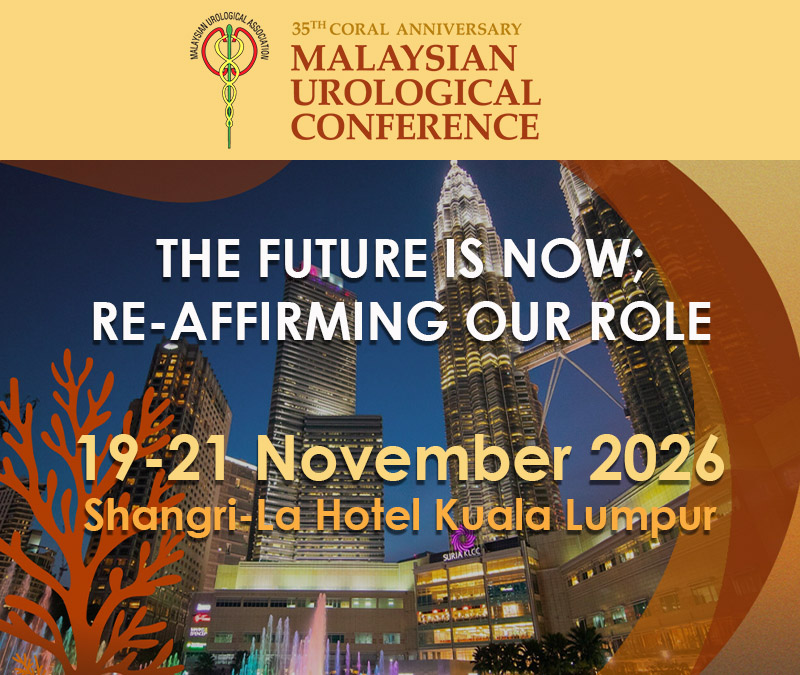
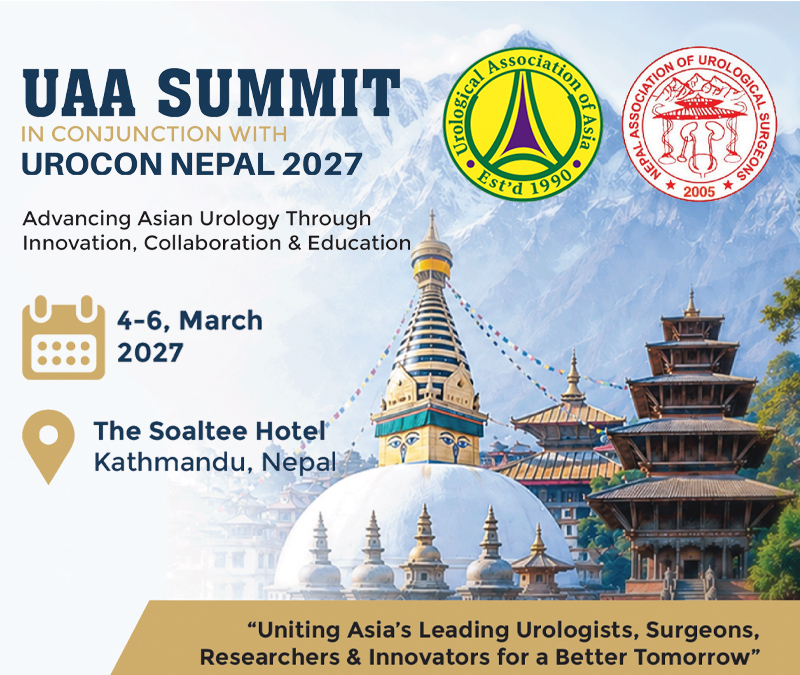
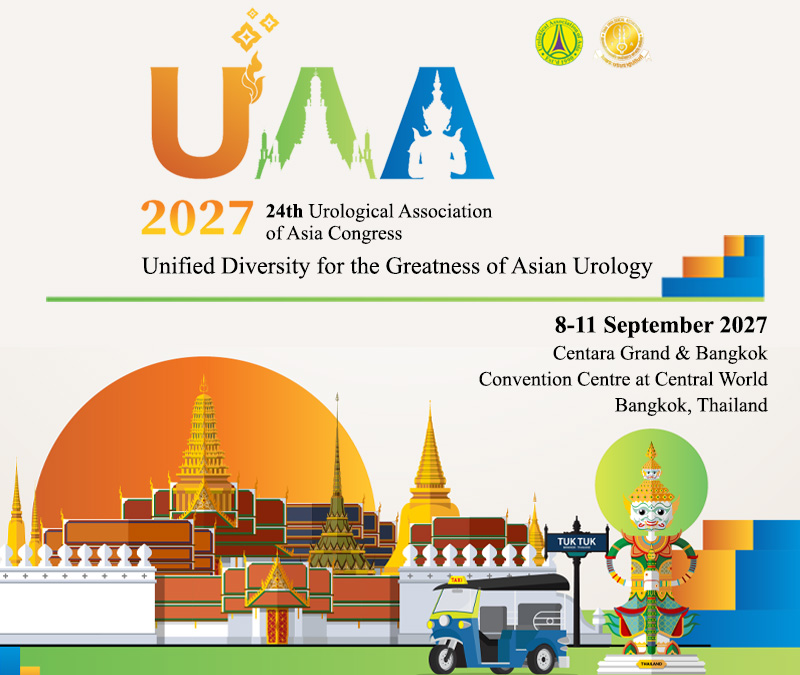
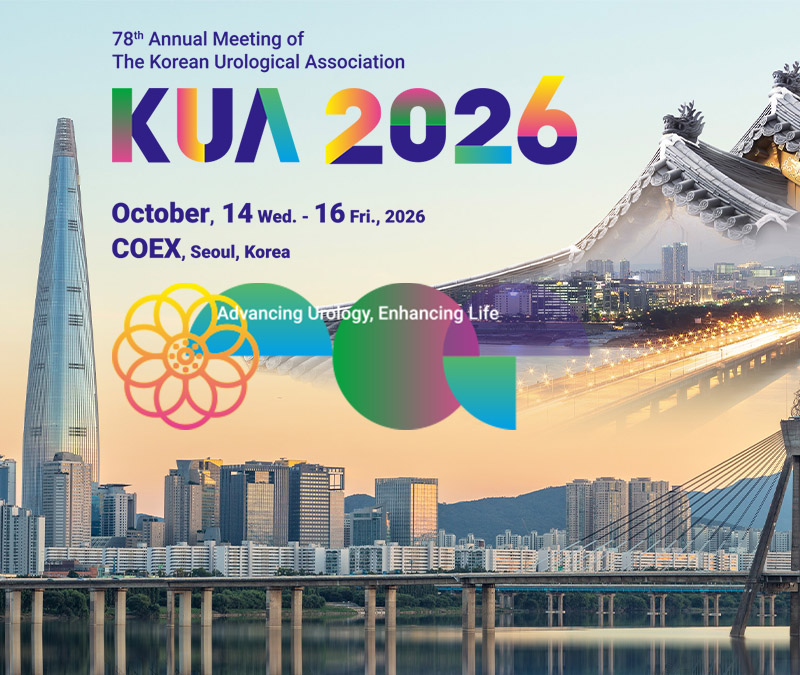
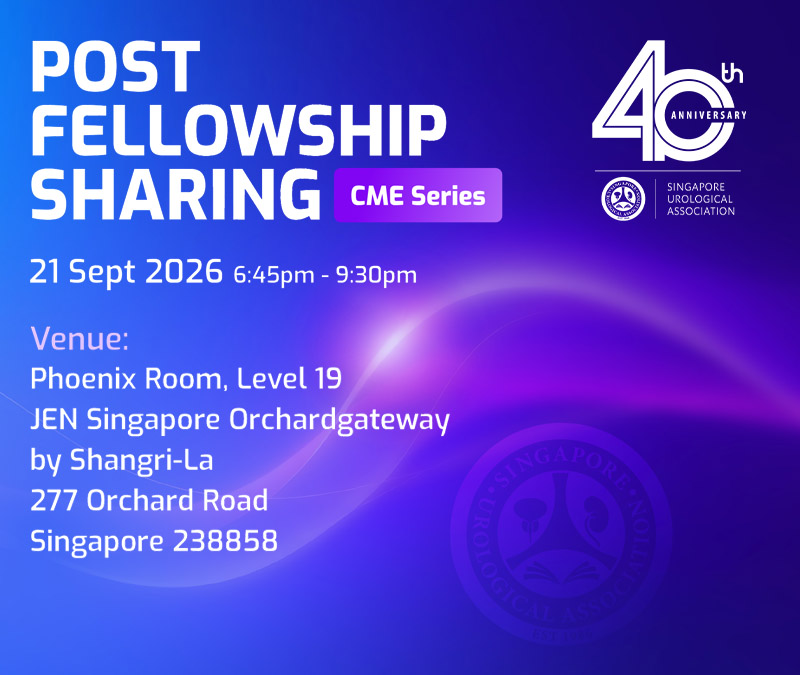
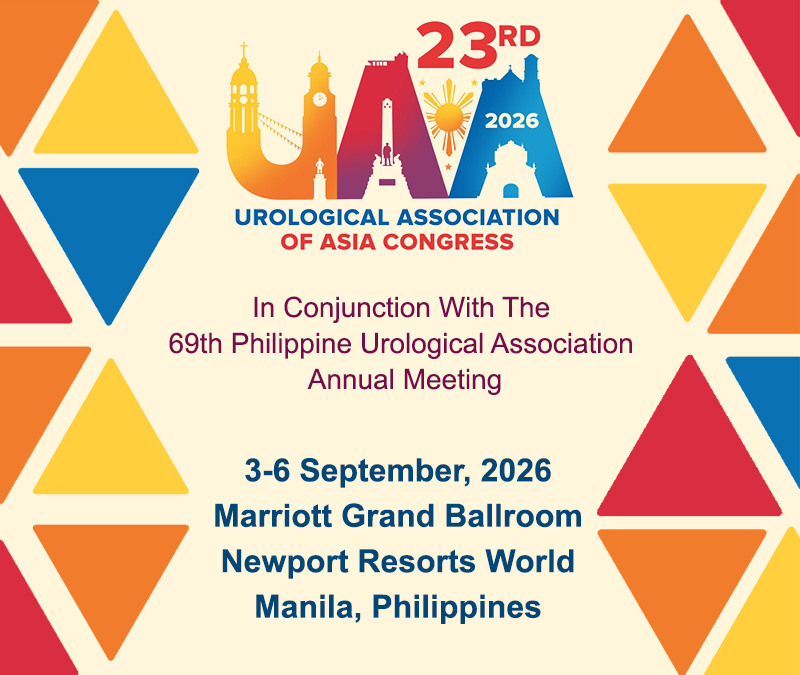
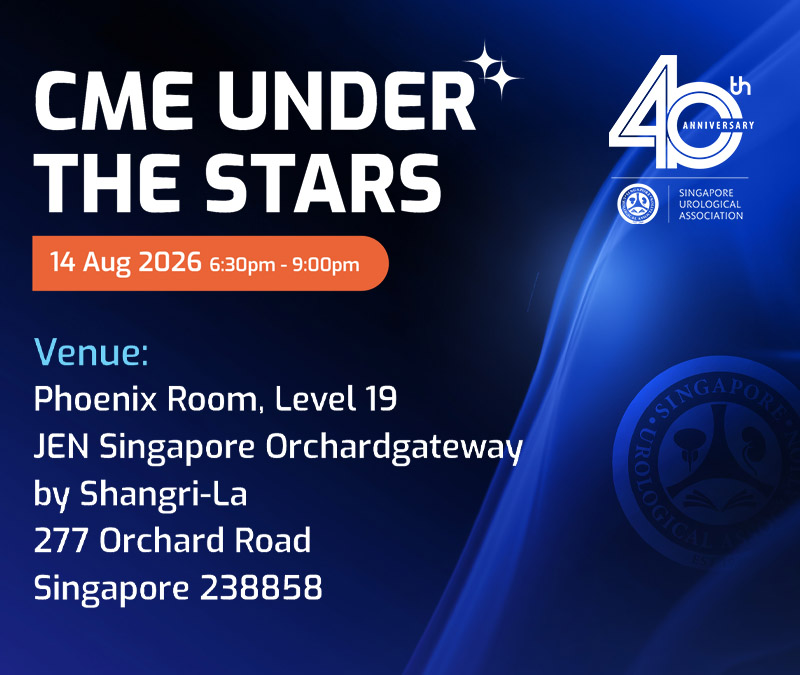
Upcoming Event


SUA Newsletter

The Urologist March 2022

The Urologist March 2021


SUA Campbell Book Club 2026
| Date | Topic | Presenter | Whip | Venue | Remarks |
|---|---|---|---|---|---|
| 10/01/2026 | Renal pathophysiology (fluids & electrolytes) in critical care | Daanesh Huned | Dr Tracy Tan | Virtual | Zoom |
| 24/01/2026 | Renal vascular diseases and renal failure | Chan Ming Tow | Dr Ho Quan Yao | Virtual | Zoom |
| 14/02/2026 | Principles of renal transplantation | Alex Lua | Dr Lee Fang Jann | Virtual | Zoom |
| 28/02/2026 | Infections & inflammation – UTI, GU TB & prostatitis | Lim Qi Yang | Dr Melissa Tay | Virtual | Zoom |
| 28/03/2026 | Testicular tumours – diagnosis, staging, treatment of Stage I tumour and risk factors for recurrence | Jeremy Tay | Dr Karthik Thandapani | Virtual | Zoom |
| 11/04/2026 | Treatment of metastatic testicular cancer including RPLND | Kyaw Lin | Dr Wu Qing Hui | Virtual | Zoom |
| 25/04/2026 | Pathophysiology, Classification and Evaluation of Lower Urinary Tract and Urinary Incontinence | Lynnette Tan | Dr Toh Khai Lee | Virtual | Zoom |
| 23/05/2026 | BPH I: Pathophysiology, Evaluation and Medical Management | Tiffany Ng | Dr Alvin Low | Virtual | Zoom |
| 30/05/2026 | Basics of UDS and interpretation | Kaiying Wang | Dr Park Joon Jae | CGH | In-Person |
| 06/06/2026 | BPH II: Surgical Management Modalities including MIST, AEEP and instruments | Roxanne Teo | Dr Lim Yong Wei | SKH | In-Person |
| 20/06/2026 | Penile, scrotal & urethral cancers | Chan Ming Chun | Dr Chester Choo | Virtual | Zoom |
| 01/08/2026 | Endourology I: Urolithiasis – Epidemiology, Evaluation and Medical management | Colin Quek | Dr Palaniappan Sundaram | SKH | In-Person |
| 29/08/2026 | Endourology II: Urolithiasis – Endoscopic equipment: URS / RIRS / stents / access sheaths / lasers / adjuncts | Shauna Woo | Dr Mon Mon Oo | Virtual | Zoom |
| 05/09/2026 | Endourology III: Urolithiasis – ESWL / PCNL & surgical management of upper tract stones | Li Jingqiu | Dr Yeow Yuyi | Virtual | Zoom |
| 19/09/2026 | Renal tumour I: Approach to SRM / renal cysts, nephron-sparing surgical techniques | Sunil Gill | Dr Jeffrey Leow | TTSH | In-Person |
| 03/10/2026 | Renal tumour II: Familial RCC & locally advanced / metastatic RCC | Yen Jie | Dr Tan Teck Wei | Virtual | Zoom |
| 17/10/2026 | Erectile dysfunction & hypogonadism | Chan Ming Tow | Dr Ng Tze Kiat | Virtual | Zoom |
| 07/11/2026 | Male subfertility | Chen Weiren | Dr Joe Lee | Virtual | Zoom |
| 21/11/2026 | CPPS and interstitial cystitis | Joseph Wong | Dr Yong Jin | SGH | In-Person |
SUA Statement regarding the role of HPV vaccination in men
We refer to the ST article dated 14 July 2024 titled “ Doctor group recommends HPV vaccination for men, to improve public health in S’pore”.
The Singapore Urological Association recognises the evolving evidence related to HPV vaccination and its benefit of reducing the development of selected HPV related cancers in men. However, we await the availability of level 1 evidence, that will guide the decision on the extent of benefit for routine HPV vaccination in men, and its effect on reducing the incidence of genital squamous cell cancers. As such, for men currently considering inoculation against HPV, we advise personal decision-making after a discussion with your doctor. At the same time, the Association advocates public adherence to the National Vaccination Programme recommended by the Ministry of Health.
*ASCO news release regarding benefits of HPV vaccination in men

European Board of Urology (EBU) In-Service Assessment
In March 2026, 28 trainees sat for the European Board of Urology (EBU) In-Service Assessment. We are proud to announce that our candidates achieved a 100% pass rate. Special mention and congratulations to Dr. Yang Xinyan who is the highest scorer in this year’s assessment.


